Team Building Workshop for Managers: What Changes on Monday
A team building workshop for managers should change how they lead on Monday. A comedian who runs them on feedback, listening and humor that builds trust.
By Richie Redding · · 5 min read
If you're planning next year's training budget, there's probably a line on it that says "team building workshop for managers." Too often that line turns into an escape room, a trust fall and a group photo. Everybody has a nice Friday. Then on Monday the same manager gives the same vague feedback in the same tense one-on-one.
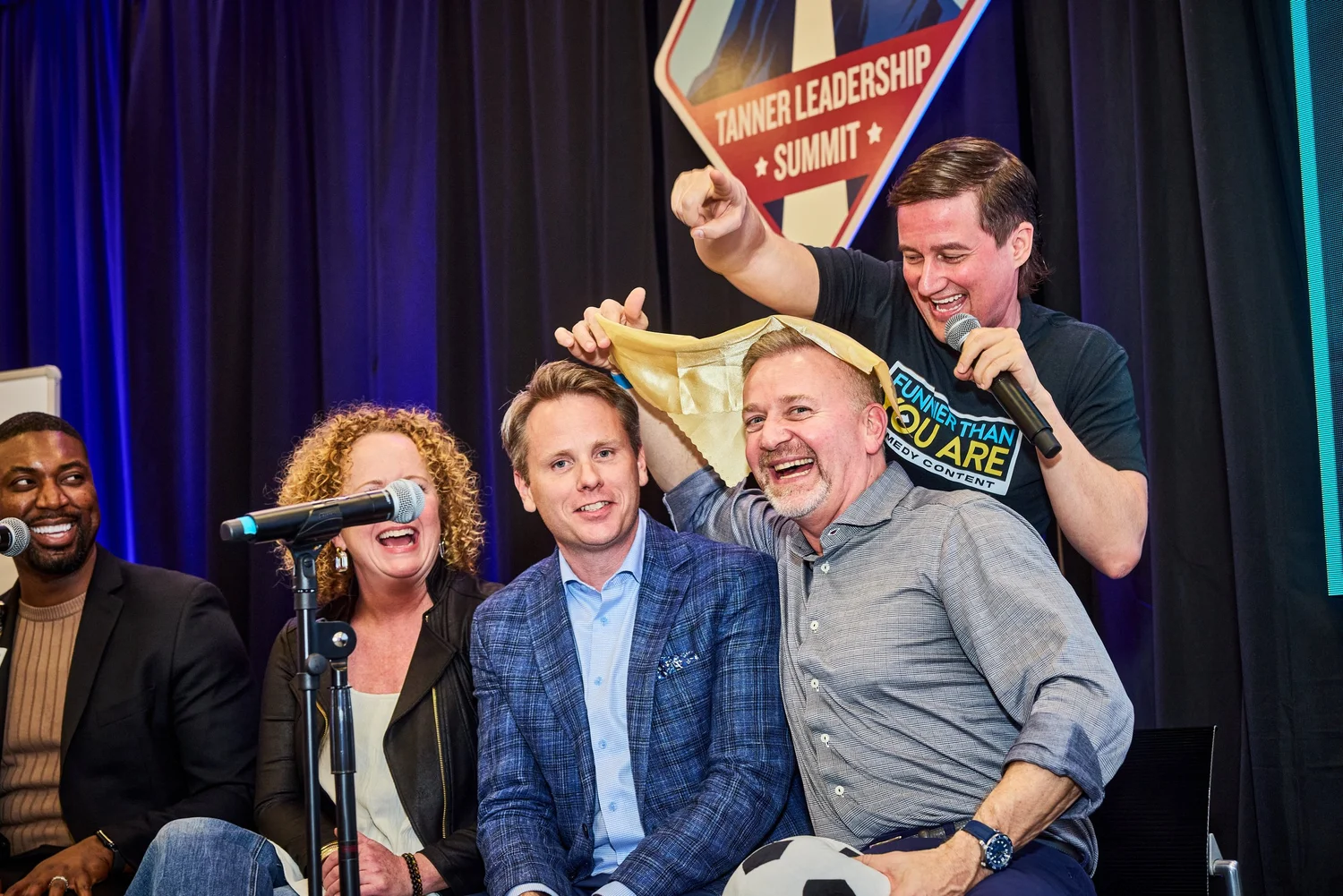
I've done stand-up for more than 20 years, and these days a good part of my week goes to running leadership workshops. So if you're the one signing off on that line, here's what I think a team building workshop for managers should do, what the research says managers are missing, and how I'd tell a good session from a pricey day of icebreakers.
Why do managers need team building more than their teams do?
Because the numbers keep pointing at the middle of the org chart. A June 2026 piece from The Conversation, republished by Fortune, says only about 30% of employees told Gallup they're engaged at work, the lowest level in more than a decade. The same article cites Gallup data showing only 46% of American workers clearly know what their employers expect from them, down from 56% in 2020.
More than half of your people aren't sure what the job is, and the person whose job it is to tell them is usually a manager.
Managers aren't having a great time either. Harvard Business Review reported in October 2025 that middle managers feel less psychologically safe than both their bosses and their teams. They're squeezed from both sides, so they play it safe, and playing it safe usually means saying less.
What managers were never taught
The stat I bring up in almost every session comes from a survey of 600 U.S. employees by the coaching company Radical Candor. As CNBC reported, over 70% of managers said they "rarely" or "never" had opportunities to practice giving feedback before stepping into leadership roles.
We promote people because they were great at the job, and then we hand them a completely different job with no rehearsal. In comedy we'd call that putting someone on stage at the Garden without ever letting them do an open mic.
The same survey found 61.3% of individual contributors often see people staying silent when they disagree, and almost 62% of respondents said feedback is "too vague" or avoids the real issues. So the team goes quiet, the manager goes vague, and everybody calls it "culture."
That's why I'd spend a team building workshop for managers on the conversation itself. Most teams bond fine at lunch. They need managers who can sit down and say the clear, honest thing.
What makes a leadership training workshop worth the money?
I've sat through enough corporate sessions to know what doesn't stick: an inspiring speaker, a binder, and nothing anyone practices. Here's what I'd look for before you book anyone, me included.
- Lots of reps. Managers should spend most of the time practicing real conversations: the feedback talk, the "here's what I expect" talk, the "I got that wrong" talk. Comedians get good by doing it in front of people, badly at first, and the same goes here.
- Active listening skills for managers, practiced out loud. One of my favorite exercises is simple. Before you respond to a pushback, repeat the other person's point in one sentence. Most managers find out they've been answering a question nobody asked.
- Clear expectations, treated as a skill. With 46% of workers unsure what's expected, every manager should leave able to say what good work looks like on their team in two sentences.
- Humor, taught carefully. I'll get to this below, because the wrong kind does real damage.
- A follow-up plan. A single great afternoon fades. Ask how the trainer keeps the habits going over the next few months.
How to build trust with your team using humor (the right kind)
People hire me because I'm a comedian, and then I spend part of the workshop telling managers to be careful with jokes. That surprises them, but the research backs me up. Researchers from Syracuse, Auburn, the National University of Singapore and Sun Yat-Sen University published a study in the Journal of Organizational Behavior on how leader humor affects employees. As Syracuse's Whitman School summarized it, when leaders use humor that "involves playfulness and relational connection," their people become more engaged and more willing to push for changes that help the team. When leaders use humor that "involves teasing and sarcasm," their people become more inhibited and less willing to speak up.
So the same boss with the same sense of humor can either open the room up or shut it down, depending on who the joke lands on. My rule for managers is short: aim the joke at yourself or the situation, never at someone who reports to you. A self-deprecating line from the boss tells the team it's safe to be human. A "playful" dig at the quiet guy in accounting tells everyone to stay quiet.
To me, psychological safety at work comes down to whether people believe they can say the true thing without becoming the punchline.
Questions to ask before you book a team building workshop for managers
If you're comparing options for 2027, here's a quick checklist I'd use:
- How much of the session is practice versus presentation?
- Will managers rehearse feedback and expectation-setting with real scenarios from your workplace?
- Does the trainer address humor directly, including what not to do?
- What happens after the workshop, and how will you know it worked?
- Will your managers actually want to come back after lunch?
That last one matters more than people admit. If the session is boring, nobody practices anything. Making it fun is how you get managers to try the awkward stuff in front of their peers.
I've written about leaders getting humor half right, like Sam Altman's "Ram Altman" moment, and about why 43% of CEOs fear approachable leadership. You can find more in our humor in leadership posts.
If you want your managers practicing the conversations that build trust, and laughing while they do it, that's exactly what we do in our Leading With Levity leadership workshops. Tell me where your managers are stuck, and I'll build the session around it.
Frequently asked questions
- What should a team building workshop for managers include?
- Most of the time should go to live practice. Managers should rehearse giving feedback, listening without interrupting and setting clear expectations, then get notes on how it landed. Good sessions also cover humor that builds trust instead of teasing, and end with one or two habits each manager commits to using with their team that week.
- Do team building workshops actually work?
- They work when they change what managers do on a normal workday. A day of games that nobody connects back to the job fades fast. Sessions built around practicing real conversations, like feedback and expectation-setting, give managers skills they can repeat. Follow-up over the next few months is what makes the habits stick.
- How does humor help managers build trust with their team?
- It depends on the kind of humor. A 2022 study in the Journal of Organizational Behavior found playful, connecting humor from leaders helped employees speak up and gain status, while teasing and sarcasm made them more inhibited. Managers who joke at their own expense, never at an employee's, tend to lower tension and build trust.
Sources
- CNBC: 6 in 10 employees are hesitant to speak up at work, says survey (May 7, 2026)
- Fortune / The Conversation: Worker engagement just hit a decade low, and new data shows why managers are the problem (June 23, 2026)
- Syracuse University Whitman School: Laughing With Me or Laughing at Me? The Differential Effects of Leader Humor Expressions on Follower Status and Influence at Work (May 13, 2022)
- Harvard Business Review: Middle Managers Feel the Least Psychological Safety at Work (Oct. 22, 2025)