Gen Z Communication Skills Are the Real Edge in a Frozen Job Market
LinkedIn's CEO says the fastest path to a job is a conversation with a real person. Why Gen Z communication skills matter more in a frozen job market.
By Richie Redding · · 5 min read
LinkedIn's CEO gave Gen Z some career advice today, and most of it was about getting coffee with people.
Daniel Shapero told Fortune that "It is a frozen job market, and that does make it tougher for people that are earlier in their career for sure." Then he said the fastest path to a job, according to LinkedIn's own data, is connecting with someone who already works at the company you want. That puts Gen Z communication skills (the talking, the asking, the following up) right at the center of who gets hired.
If you hire or onboard new grads, this should get your attention. Fortune says around 9,000 applications go through LinkedIn every minute, and the person running the place is telling young people their best shot is a conversation.
What did the LinkedIn CEO actually say?
Shapero's message had two halves. The market is frozen, and early-career people feel it most. But he also thinks young candidates have "advantages" in a job interview, especially as companies try to embrace AI. Fortune adds that employers may assume Gen Z is AI-savvy, even when they don't actually know more about AI than older colleagues. (Somewhere, a 55-year-old who automates everything just felt very unseen.)
The part I keep thinking about is his fundraising comparison. "You wouldn't just email all the VCs and hope that someone wrote you a check," he said. "You would try to meet people." He said connecting with people at your target companies "is increasingly a part of the hiring process," and that the most successful people "turn every conversation into three more conversations."
Every piece of that advice depends on being able to talk to a stranger and make them want to talk to you again.
Why is the job market so hard for Gen Z?
Shapero isn't the only one using the word frozen. In October, Marketplace described a market where workers are too nervous to quit, so employers have no openings to fill. The report noted that employers added only 29,000 jobs in September, and that new entrants to the labor market are among the people hit hardest.
In a Fortune commentary from March, economists Janelle Jones and Nia Law of the Groundwork Collaborative wrote that the share of unemployed Americans who are new workforce entrants hit a 37-year high in 2025, peaking at 13.3% in July. They call it a structural problem, and I agree with them. "Gen Z is not unemployable," they wrote. "They are knocking on locked doors."
Young people know which door is locked, too. In LinkedIn's research from this spring, 44% of Gen Z respondents said not having the right network is the biggest barrier to landing an entry-level role. (Censuswide ran that survey with 1,000 U.S. workers aged 18 to 29 in their first three years of work.)
Put those side by side. The advice from the top is "meet people," and almost half of the people getting it say meeting the right people is exactly where they're stuck.
Gen Z communication skills are a training problem
I've written about why companies are firing Gen Z and about how entry-level jobs used to teach these skills on the side. When employers complain about new grads, the complaint is almost always about the human stuff. The work gets done. The conversation around the work is where people stumble.
A lot of managers treat networking like a personality trait, as if some people are just born good at it. I don't buy that. Walking up to someone at an industry event, saying something that isn't weird, and leaving with a reason to email them next week is a string of small skills, and you can practice every one of them.
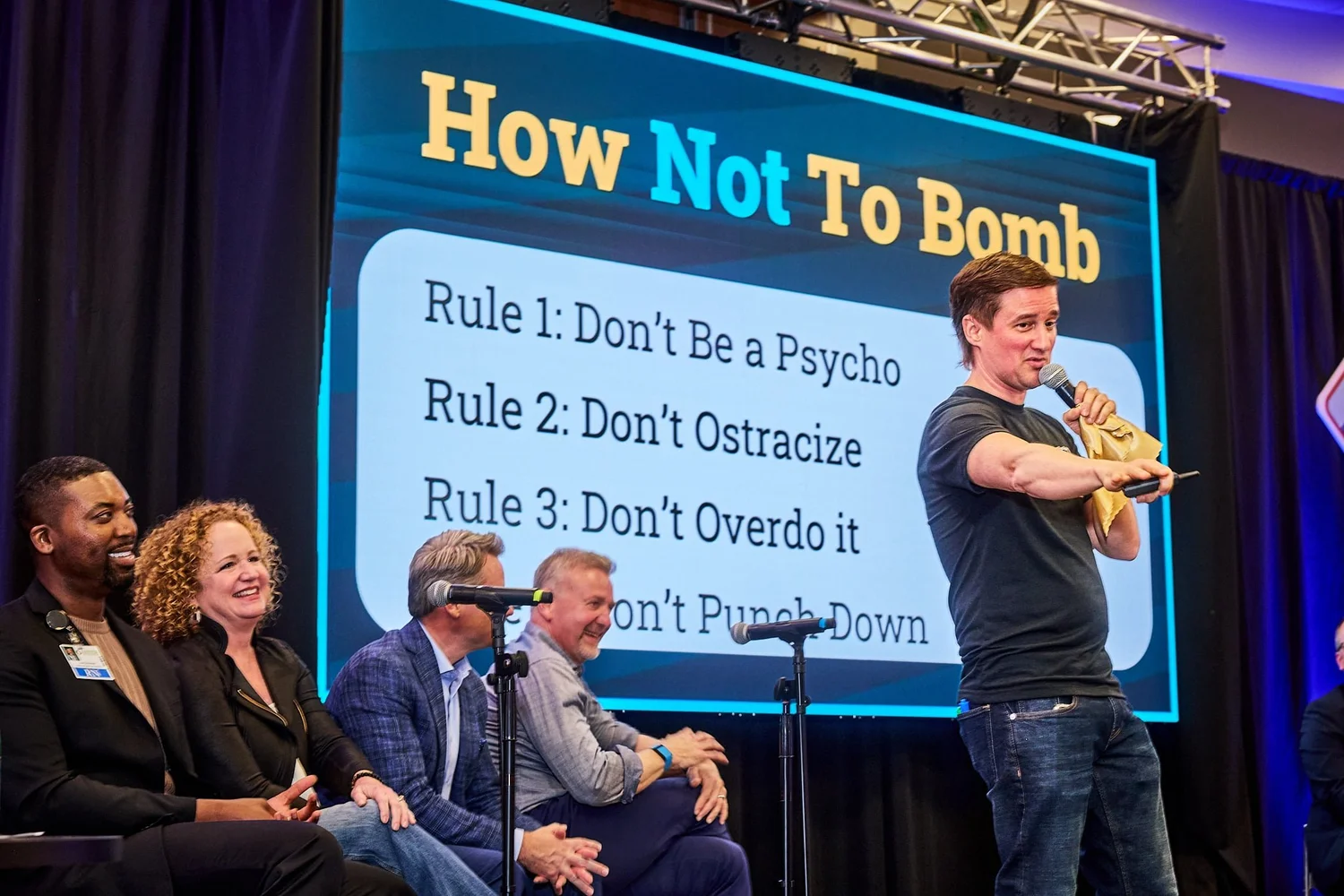
That's my whole job as a host, and I've hosted over 5,000 comedy shows. You walk out, you talk to strangers in the front row, you find out something true about them and you get the room on their side. Nobody does that well the first night. You get better because you do it again the next night, and the night after that, and the crowd tells you right away when you've missed.
I've also emceed New Student Orientation at the University of Pennsylvania, which is a room full of smart, nervous people who are about to spend four years meeting each other. Getting them talking is the same skill. Somebody has to give them a reason and a little permission.
Most new grads haven't been short on talent. They've been short on reps, and a frozen market hands out even fewer.
How to help new hires build the skills Shapero is describing
If the fastest way into your company runs through a conversation, then teaching new people to have good conversations is part of onboarding Gen Z employees. Here's what I'd start doing tomorrow:
- Teach the follow-up as well as the hello. "Every conversation into three more" is really about the second message. Show new hires how to send a short note after a meeting that mentions one specific thing the other person said.
- Make introductions part of the buddy's job. Ask every manager or onboarding buddy to introduce a new hire to two people outside their team in the first month, then ask the new hire what they learned from each one.
- Rehearse the awkward moments: introducing yourself to a senior leader, asking a question in a big meeting, calling a client when an email would feel safer. Five minutes of practice with a colleague will do more than a slide about "professional presence."
- Give feedback on conversations the same day. You'd flag a spreadsheet error right away. Do the same, kindly, when someone fumbles a client call.
- Run onboarding in cohorts, so new hires build their first network inside your building.
People who are scared of looking foolish don't practice, which is why humor matters here. Once a room is laughing, somebody will try the awkward introduction out loud. That's what my soft skills training for new hires is built around in the New Hire Orientation workshop: conversation reps, low stakes, and a lot more laughing than your average compliance video.
Gen Z in the workplace still needs a human on the other end
It's a little funny that after years of one-click applications, the CEO of LinkedIn is telling people to go talk to someone. I think he's right, and I think employers can do more than nod along. If you want your next class of hires to turn one conversation into three, give them the practice before you need them to do it.
There's more on this in my Gen Z at work posts. And if your onboarding could use more conversation and fewer slides, let's build that practice into your New Hire Orientation.
Frequently asked questions
- What did LinkedIn's CEO say about the job market for Gen Z?
- In a November 2026 interview with Fortune, LinkedIn CEO Daniel Shapero called it a frozen job market that is tougher for people early in their careers. He also said young candidates can stand out, and that LinkedIn's data shows the fastest path to a job is connecting with someone who already works at the company.
- Why do Gen Z communication skills matter so much right now?
- When few companies are hiring, applications pile up and a real conversation becomes the thing that gets someone noticed. In LinkedIn research from 2026, 44% of young workers said not having the right network was their biggest barrier to an entry-level job. Networking is a communication skill, and it improves with practice.
- How can employers help new hires build communication skills?
- Treat conversation as something you train. Give new hires low-stakes practice introducing themselves, asking good questions and following up. Pair them with colleagues who will make introductions, run onboarding in cohorts, and give quick feedback on real interactions. Humor helps because relaxed people are more willing to try the awkward thing out loud.
Sources
- Fortune: LinkedIn CEO says the job market is 'frozen,' but Gen Z have an edge, and networking is key (Nov. 23, 2026)
- LinkedIn News: How Graduates Can Find the Best Job Opportunities in 2026 (Apr. 15, 2026)
- Marketplace: A frozen job market means nobody's getting laid off, but nobody's getting hired (Oct. 8, 2026)
- Fortune (commentary): The entry-level job market is the worst it's been in 37 years. Stop blaming Gen Z (Mar. 21, 2026)